
A green gauge and an intact instruction label pass every glance-and-walk visual check. But when the identification information is gone, the extinguisher has no traceable identity — and no inspection history that can be verified.
Most people looking at a fire extinguisher are doing a single-pass visual check: is it red, is the gauge in the green, is the pin in place, does it look like a fire extinguisher? If yes to all four, the check is done.
This is not a compliant inspection. And this unit is a good example of why.
What We Found
This Badger Advantage ABC dry chemical extinguisher came in with the gauge sitting solidly in the green. Pressure was there. The instruction label — the yellow PASS diagram — was intact and readable. The unit looked serviceable.
But the identification label was gone. The serial number, model data, manufacture date, certification markings, and ULC listing information that make this unit traceable were missing. The instruction label told you how to use it. There was nothing to tell you who built it, when it was built, whether it had ever been hydrotested, or whether any previous service had actually been performed on this specific unit.
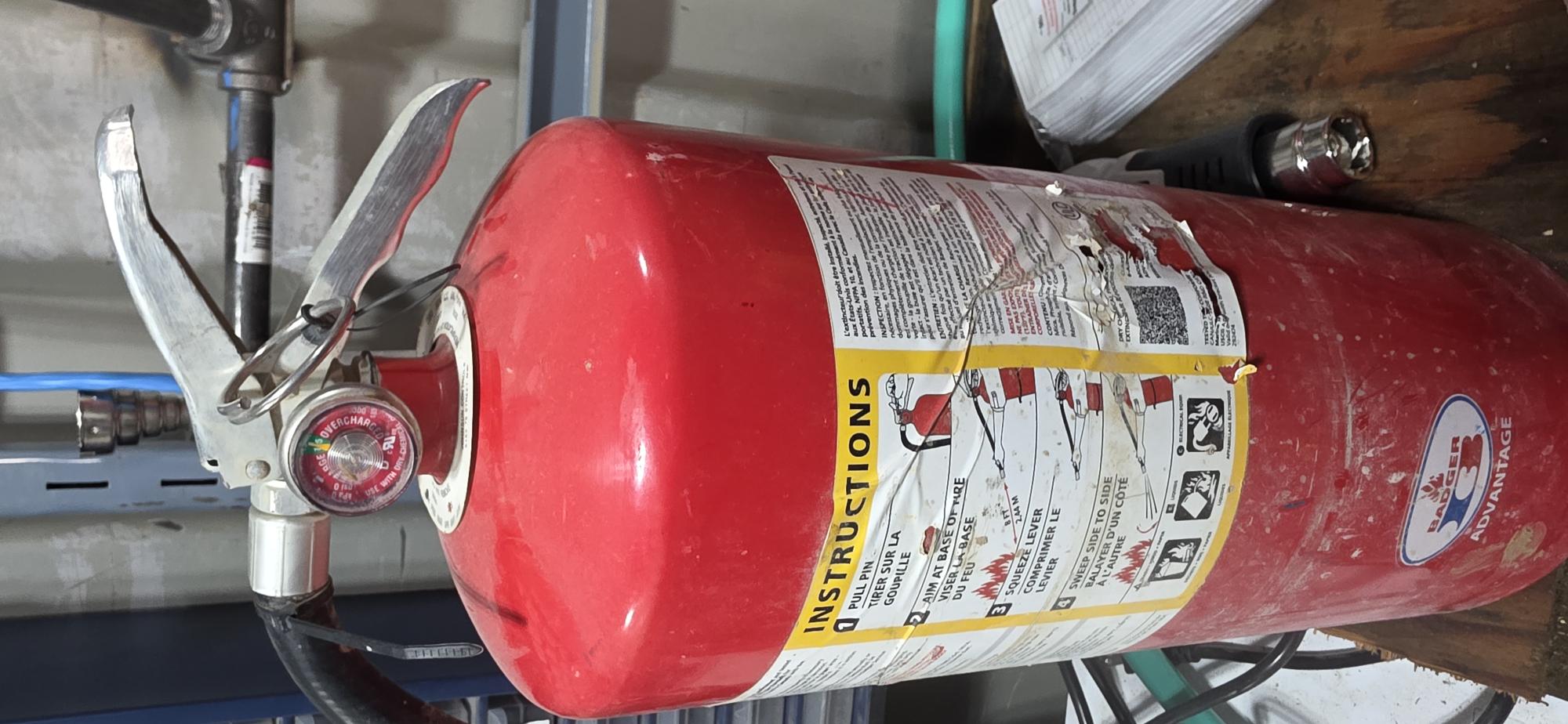
What a Green Gauge Actually Tells You
A gauge in the green tells you one thing: the cylinder currently contains pressure within the expected operating range. It does not tell you:
- When the extinguisher was last inspected by a certified technician
- Whether the internal components are in serviceable condition
- Whether the correct agent type and quantity are present
- When the cylinder was manufactured and whether a hydrostatic test is due
- Whether the unit has been partially discharged and recharged without documentation
- Whether this unit matches any record in your compliance system
Why Missing Identification Is a Compliance Failure
NFPA 10 requires that fire extinguishers be identifiable and that their service history be documented and traceable. An extinguisher without a readable serial number or manufacture date cannot meet these requirements regardless of its physical condition.
Without identification, a technician performing an annual inspection cannot confirm the hydrostatic test interval — they do not know when the cylinder was manufactured, and therefore cannot calculate when testing is due. Without a serial number, the unit cannot be linked to a service record. Without a service record, there is no documented evidence that any previous inspection was ever performed.
In a compliance audit, this unit fails. Not because the gauge is wrong. Because the unit cannot be verified.
How This Happens
Identification labels are separate from instruction labels on most extinguishers. The instruction label — the yellow PASS diagram — is typically large, laminated, and glued to the front of the cylinder where it is easy to see and hard to miss. The identification label is usually smaller, often placed on the back or side of the cylinder, and more vulnerable to abrasion, moisture, heat, and the general abuse of industrial service.
The result is a unit that looks completely normal from the front — instructions visible, gauge readable, pin in place — and has lost all traceability from the side or back where no one is looking during a monthly check.
Monthly inspections that treat the instruction label as confirmation of compliance are missing the point. The instruction label tells you how to use the extinguisher. The identification label tells you whether it is allowed to be in service.
What Happens to a Unit Like This
A unit with missing identification is documented, photographed, and removed from compliance records as an active traceable unit. If the manufacture date can be determined from stamps on the cylinder itself, the unit may be re-labelled and returned to service after a full inspection confirms its serviceability. If the manufacture date cannot be determined, the hydrostatic test interval cannot be calculated and the unit is typically retired.
The cost of a replacement extinguisher is predictable. The cost of a unit that passes every visual check while accumulating an unverifiable service history is harder to calculate — until an audit, an incident, or a major operator compliance review forces the answer.
Stop Tracking This Manually.
The Inuksuk Compliance Platform tracks every inspection, hydrostatic test, recharge, and deficiency across your entire extinguisher fleet — automatically. Real-time compliance status, technician accountability on every record, and audit-ready reports in 30 seconds. Built by certified field technicians for industrial and multi-site operations.