
Overloaded circuits, damaged cords, and warning signs behind the scenes can become electrical fires. Use this six-point checklist at home or work, and know which extinguisher is appropriate if a small fire starts.
Electrical fires often begin quietly behind walls, outlets, equipment, or workstations. A warm outlet, flickering light, repeated breaker trip, or burning smell is not normal operation — it is a reason to stop and have the problem checked.
Use the checklist below at home and in the workplace. Have suspect wiring inspected by a licensed electrician, and never attempt an electrical repair beyond your training.
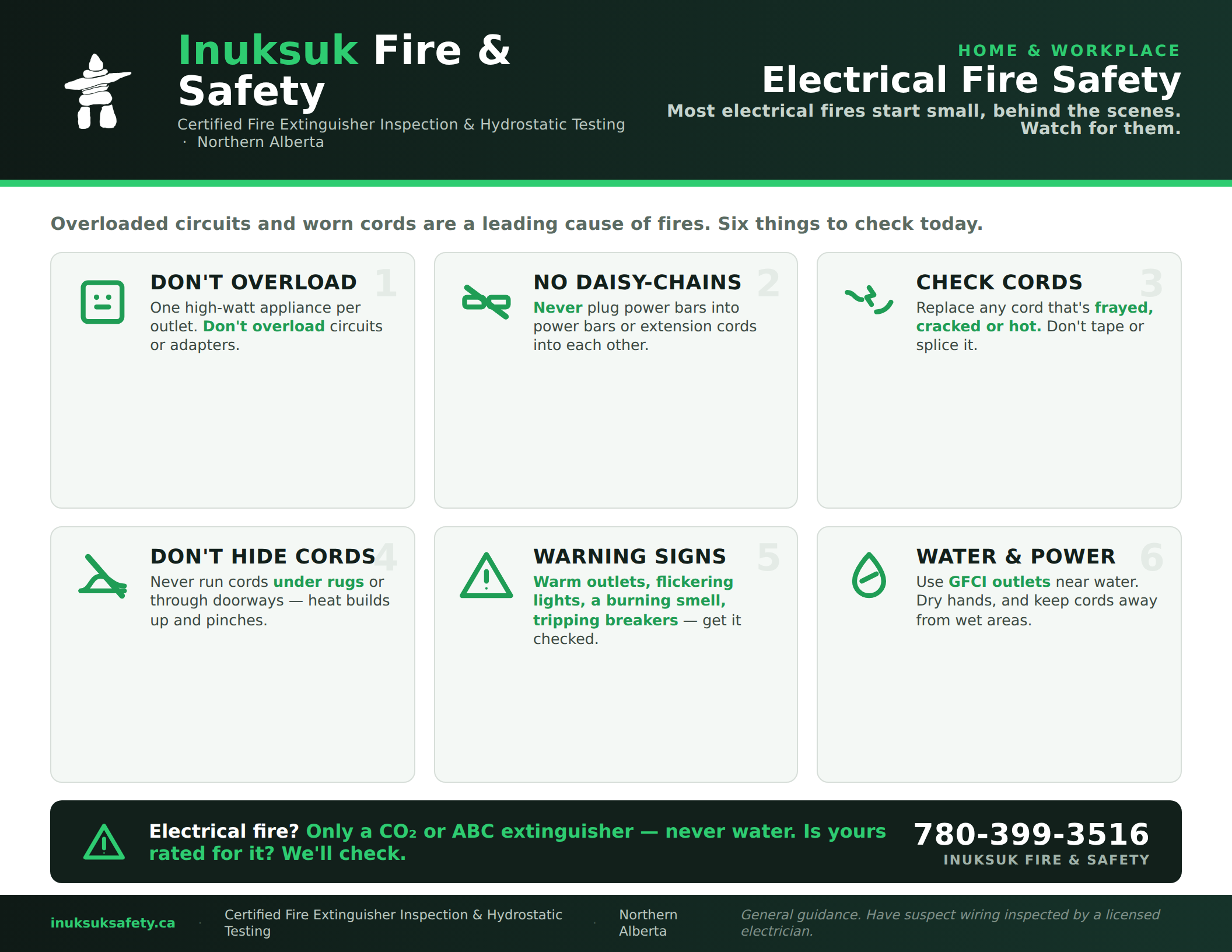
1. Do Not Overload Circuits
Use one high-watt appliance per outlet when possible, and do not overload circuits or adapters. Keep high-draw equipment on circuits intended for its load. If a breaker trips repeatedly, investigate the cause instead of repeatedly resetting it.
2. Avoid Daisy Chains
Never plug a power bar into another power bar or connect extension cords into each other. Daisy chains can create heat and overload protection devices. Use the correct cord length and rating for the equipment.
3. Replace Damaged Cords
Replace cords that are frayed, cracked, pinched, or hot. Do not tape, splice, or continue using a damaged cord as a permanent fix. Inspect cords on portable equipment, heaters, tools, chargers, and appliances.
4. Do Not Hide Cords
Never run cords under rugs, through doorways, or where furniture can pinch them. Heat can build up under coverings, and repeated foot or door pressure can damage insulation.
5. Act on Warning Signs
Warm outlets, flickering lights, a burning smell, buzzing, sparks, and tripping breakers all need attention. Turn off and unplug suspect equipment if safe, keep people away, and call a licensed electrician.
6. Keep Water Away From Power
Use GFCI outlets near water, dry your hands before using electrical equipment, and keep cords away from wet areas. Never use water on an energized electrical fire.
If an Electrical Fire Starts
Raise the alarm and call 911. If the fire is small, contained, and your exit is clear, use only an extinguisher rated for the hazard, commonly CO₂ or ABC dry chemical. Do not put yourself near exposed conductors or delay evacuation to isolate power unless you are authorized and can do so safely.
InspectExtinguishers helps businesses and fire extinguisher service companies track electrical-room units, inspection status, deficiencies, and service history. Visit InspectExtinguishers at inspectextinguishers.com to start a free trial.
Keep extinguisher locations, inspections, deficiencies, and service dates organized.
Affiliate link — we may earn a commission from qualifying purchases
Stop Tracking This Manually.
The Inuksuk Compliance Platform tracks every inspection, hydrostatic test, recharge, and deficiency across your entire extinguisher fleet — automatically. Real-time compliance status, technician accountability on every record, and audit-ready reports in 30 seconds. Built by certified field technicians for industrial and multi-site operations.