
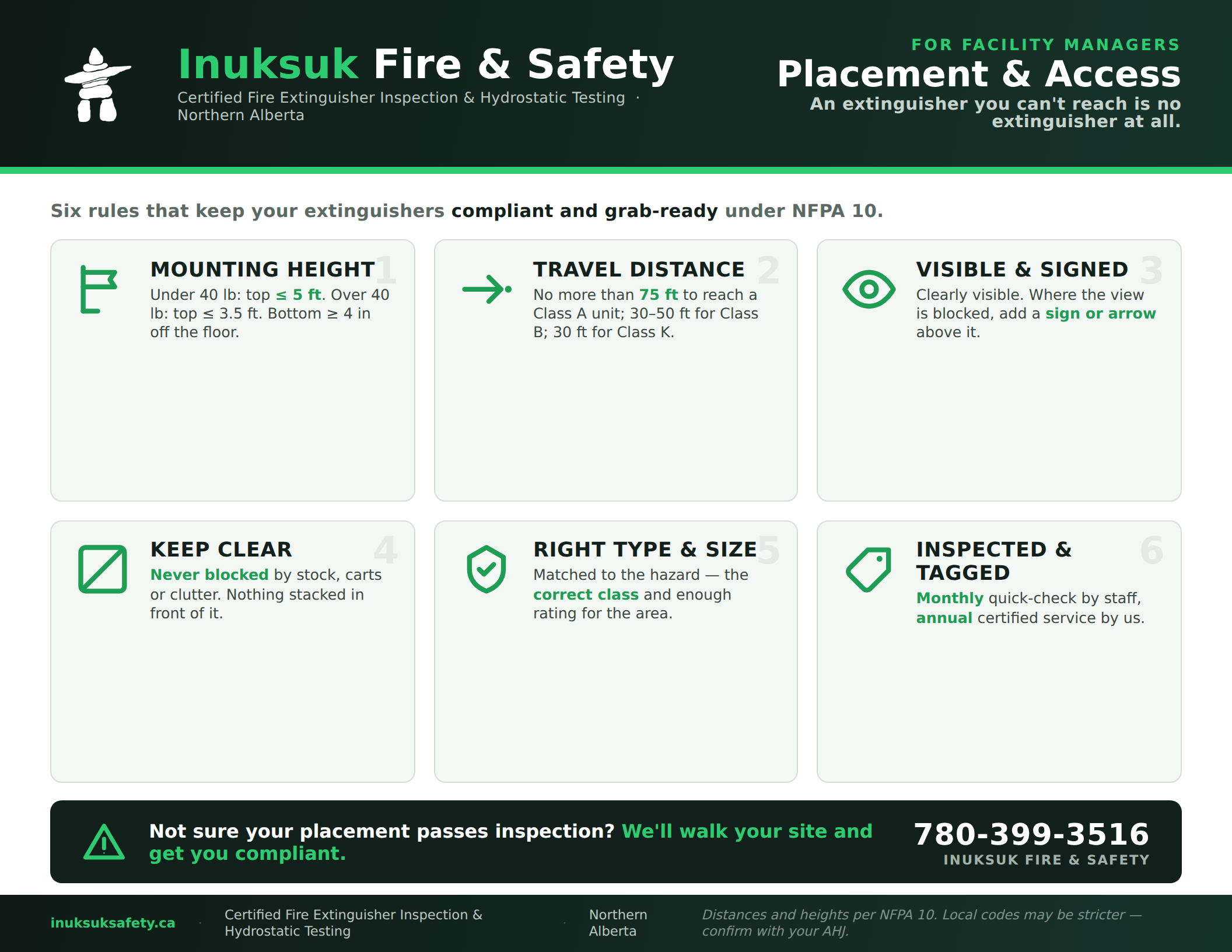
An extinguisher that cannot be reached quickly is no extinguisher at all. Review six practical placement and access rules for mounting height, travel distance, visibility, clearance, hazard matching, and inspection records.
Fire extinguishers have to be more than present — they have to be findable, reachable, correctly selected, and ready to operate. Stock, carts, vehicles, temporary barriers, and layout changes can quietly make a compliant-looking extinguisher ineffective.
Use the six rules below as a practical review of your site. The exact requirements can depend on the hazard, extinguisher rating, building conditions, and authority having jurisdiction (AHJ), so confirm local requirements when planning or changing a fire-protection layout.
1. Mounting Height
Mount extinguishers securely and keep the bottom at least four inches above the floor. For units under 40 pounds, the top should be no more than five feet above the floor. For units over 40 pounds, the top should be no more than three and a half feet above the floor. Use approved brackets or cabinets and keep the unit stable.
2. Travel Distance
People should not have to travel too far to reach the right extinguisher. The poster's NFPA 10 reference identifies a maximum of 75 feet for a Class A unit, with shorter distances for many Class B and Class K hazards. The required distance depends on the hazard and extinguisher rating, so have a qualified professional verify the layout.
3. Visible and Signed
An extinguisher should be clearly visible from normal approach paths. When a column, partition, equipment, or storage arrangement blocks the view, use a sign or arrow above the unit to show where it is. Visibility matters because people under stress will look for the equipment they already know how to find.
4. Keep Clear
Keep stock, carts, tools, vehicles, snow, and other clutter out of the approach path. Nothing should be stacked in front of an extinguisher. Review clearances after deliveries, seasonal changes, construction, and workstation rearrangements.
5. Choose the Right Type and Size
Match the extinguisher to the hazard class and provide enough rating for the area. Cooking appliances, flammable liquids, energized electrical equipment, ordinary combustibles, and combustible metals may require different protection. Do not replace or relocate units based only on appearance; get qualified advice when hazards change.
6. Inspect and Tag
Staff should complete a documented monthly visual check, while annual inspection and maintenance should be performed by a certified fire extinguisher technician. Confirm the service tag is current and readable, and act promptly when a unit is missing, damaged, discharged, or overdue.
Make Placement Easy to Verify
For multi-building sites, fleets, and service companies managing client locations, records should connect each extinguisher to its exact location and service history. InspectExtinguishers helps teams track placement, monthly checks, deficiencies, and annual service so access problems are easier to spot and correct.
Visit InspectExtinguishers at inspectextinguishers.com to start a free trial and keep your extinguisher locations organized.
Organize extinguisher locations, inspections, deficiencies, and service history across every site.
Affiliate link — we may earn a commission from qualifying purchases
Stop Tracking This Manually.
The Inuksuk Compliance Platform tracks every inspection, hydrostatic test, recharge, and deficiency across your entire extinguisher fleet — automatically. Real-time compliance status, technician accountability on every record, and audit-ready reports in 30 seconds. Built by certified field technicians for industrial and multi-site operations.