
A grease fire can become a fireball when water is added. Learn the safer response for a burning pot or fryer, why commercial kitchens need Class K protection, and when to get out and call 911.
Grease and cooking-oil fires behave differently from ordinary paper or wood fires. Water does not put them out. When water hits burning oil, it can flash into steam and throw burning grease outward, creating a rapidly spreading fireball.
The safest response depends on the size of the fire, the equipment involved, and whether you can act without putting your hands or face over the flames. Raise the alarm and call 911 first. If the fire is spreading, producing heavy smoke, or blocking your exit, get out and stay out.
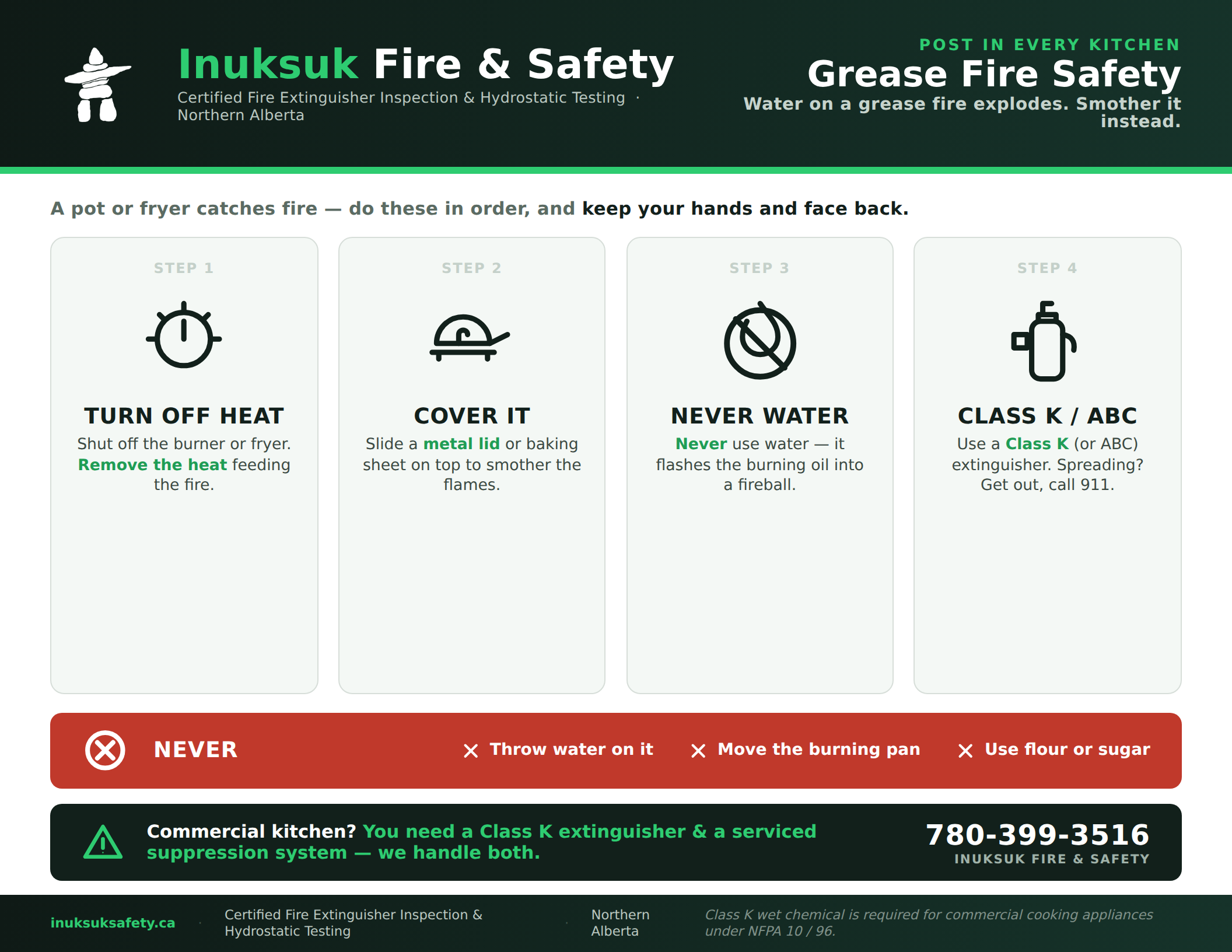
- Turn off the burner or fryer only if you can reach the control safely.
- Slide a metal lid or baking sheet over a small pan fire to smother it; never carry the burning pan.
- Never throw water on a grease fire.
- Never use flour or sugar, which can ignite and spread the fire.
- For a commercial cooking fire, use the installed suppression system and the correct Class K extinguisher as trained.
Step 1: Turn Off the Heat
If the control is immediately reachable and you do not have to reach through flames, turn off the burner or fryer. Removing the heat stops adding energy to the fire. Never move a burning pan or fryer, and do not lean over the flames to reach a control.
Step 2: Cover a Small Pan Fire
For a small, contained pan fire, slide a metal lid or baking sheet over the top to cut off oxygen. Move it from the side, keep your hands and face back, and leave the cover in place until the pan is completely cool. Do not lift the lid to check too soon.
Step 3: Never Use Water
Do not pour, spray, or splash water onto burning oil. Water sinks below the hot oil, flashes into steam, and propels burning grease out of the pan. Also avoid flour and sugar, which can ignite in the heat and spread the fire.
Commercial Kitchen Protection
Commercial cooking appliances require purpose-built protection. A Class K wet-chemical extinguisher is designed for cooking oils and fats, and commercial kitchens also need a properly serviced cooking-suppression system. Staff should know where the manual activation point, emergency shutoffs, and Class K extinguisher are located.
If the fire cannot be controlled immediately and safely, evacuate, close doors if possible, and wait for firefighters. Do not re-enter because the flames appear to be out.
Keep Cooking-Fire Equipment Ready
A Class K extinguisher that is blocked, discharged, overdue for service, or missing from its designated location is not reliable protection. Monthly visual checks and annual certified service help identify problems before a kitchen emergency.
InspectExtinguishers helps businesses and fire extinguisher service companies track kitchen extinguishers, locations, deficiencies, recharges, and service dates. Visit InspectExtinguishers at inspectextinguishers.com to start a free trial.
Keep extinguisher service and inspection records organized across your kitchen or service operation.
Affiliate link — we may earn a commission from qualifying purchases
Stop Tracking This Manually.
The Inuksuk Compliance Platform tracks every inspection, hydrostatic test, recharge, and deficiency across your entire extinguisher fleet — automatically. Real-time compliance status, technician accountability on every record, and audit-ready reports in 30 seconds. Built by certified field technicians for industrial and multi-site operations.