
Knowing the parts of a portable fire extinguisher makes it easier to recognize whether the unit is ready and how it operates. Learn the pull pin, handle, lever, gauge, hose, label, and service tag.
A portable fire extinguisher is easier to use when its key parts are familiar before an emergency. The exact design varies by manufacturer and model, but the same basic components help you carry, aim, discharge, and verify the unit.
A quick visual check can tell you whether the pin is present, the gauge is in the green, the hose is clear, and the service tag is current. It cannot replace certified inspection and maintenance. If a unit is damaged, discharged, out of pressure, or overdue, remove it from reliance and arrange qualified service.
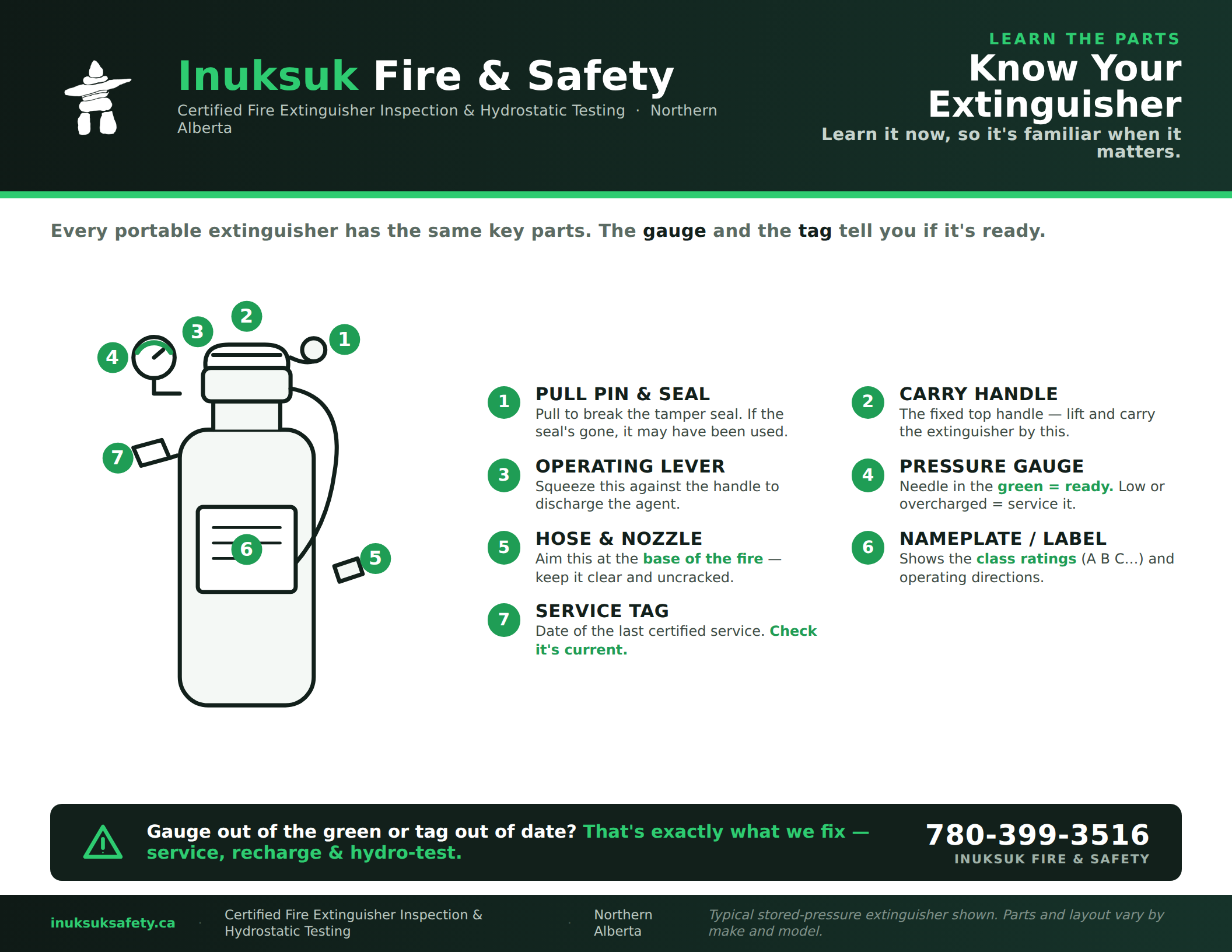
1. Pull Pin and Tamper Seal
The pull pin prevents accidental operation. Pulling it breaks the tamper seal and prepares the extinguisher to discharge. If the seal is missing or broken, the extinguisher may have been used or tampered with and should be assessed before being returned to service.
2. Carry Handle
Use the fixed top handle to lift and carry the extinguisher. Keep the nozzle pointed away from people while moving it, and do not carry a unit by its hose or operating lever.
3. Operating Lever
Squeeze the operating lever against the fixed handle to release the extinguishing agent. When using the unit on a small, contained fire, aim low at the base and sweep side to side while keeping your exit behind you.
4. Pressure Gauge
On a stored-pressure extinguisher, the gauge needle should normally sit in the green operating zone. A low or overcharged reading needs service. Never attempt to pressurize or repair the cylinder yourself.
5. Hose and Nozzle
The hose or nozzle directs the agent at the base of the fire. Keep it clear, attached, and free from cracks or damage. A blocked or damaged nozzle can prevent the extinguisher from performing when needed.
6. Nameplate and Label
The nameplate or label shows the extinguisher's fire-class ratings and operating directions. Check the class symbols before use — an ABC extinguisher does not cover every hazard, including Class D combustible metals and Class K cooking media.
7. Service Tag
The service tag records the last certified service and helps show whether the unit is current. Keep the tag readable and compare the date with your inspection program. InspectExtinguishers helps businesses and fire extinguisher service companies track each unit, its location, inspections, deficiencies, and service history.
Visit InspectExtinguishers at inspectextinguishers.com to start a free trial and keep every extinguisher record easy to find.
Track each unit's class, location, inspections, deficiencies, and certified service history.
Affiliate link — we may earn a commission from qualifying purchases
Stop Tracking This Manually.
The Inuksuk Compliance Platform tracks every inspection, hydrostatic test, recharge, and deficiency across your entire extinguisher fleet — automatically. Real-time compliance status, technician accountability on every record, and audit-ready reports in 30 seconds. Built by certified field technicians for industrial and multi-site operations.