
A monthly fire extinguisher inspection is a quick visual check that helps businesses catch access, pressure, damage, and documentation problems before an emergency. Use this six-point checklist, then arrange certified service when a unit needs more than a visual check.
Every business that keeps portable fire extinguishers should have a simple monthly visual inspection routine. It does not need to take long, but it does need to be consistent and documented. A quick check can identify an extinguisher that has been moved, blocked, discharged, damaged, or missed by the regular service program.
This monthly inspection is for the person responsible for the workplace or site — it is not the same as annual inspection and maintenance by a certified fire extinguisher technician. When a check reveals a problem, take the unit out of service as appropriate and arrange qualified service. Never rely on a questionable extinguisher in an emergency.
The Six-Point Monthly Check
Walk to every extinguisher and confirm each of the six points below. The supplied poster is designed as a quick reference for staff, site supervisors, property managers, and anyone assigned to complete the monthly check.
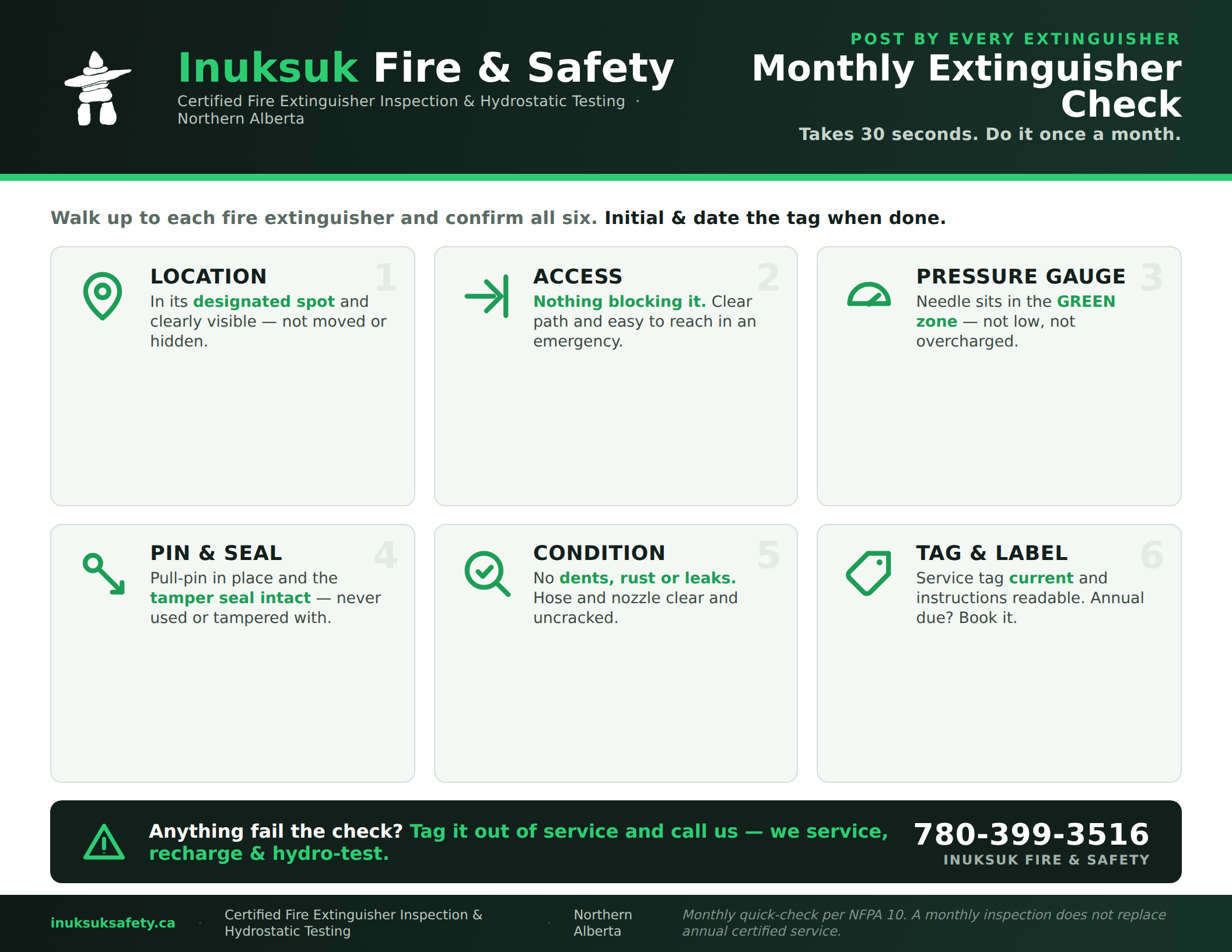
1. Location
Confirm the extinguisher is still in its designated spot and clearly visible. It should not have been moved to a closet, vehicle, storage room, or another area where someone would not know to look for it. If the hazard or layout has changed, ask a qualified professional whether the location and extinguisher type are still suitable.
2. Access
Make sure nothing is blocking the extinguisher. Boxes, equipment, vehicles, temporary barriers, snow, and stored materials can turn an accessible extinguisher into an unusable one. Keep a clear path so a person can reach it quickly without moving other objects first.
3. Pressure Gauge
If the extinguisher has a pressure gauge, confirm the needle is in the green operating zone. A gauge that reads low, high, or outside the marked operating range needs attention from a qualified technician. Do not try to pressurize, discharge, or repair the unit yourself.
4. Pin and Tamper Seal
Check that the pull pin is in place and the tamper seal is intact. A missing or broken seal can indicate that the extinguisher was used or tampered with. Even a brief or partial discharge can leave an extinguisher unable to perform when needed, so it must be assessed and recharged before being returned to service.
5. Physical Condition
Look for dents, corrosion, leaks, cracked hoses, blocked nozzles, damaged handles, or other signs of impact and deterioration. Pay special attention to units on vehicles, in workshops, outdoors, or in areas exposed to moisture, vibration, chemicals, and extreme temperatures.
6. Tag and Label
Confirm that the service tag is current and readable, and that the operating instructions and extinguisher label can be read. A monthly visual check does not replace scheduled annual inspection and maintenance. If the annual service is due or the documentation is missing, book the required service rather than assuming the unit is compliant.
What to Do When a Check Fails
If an extinguisher fails any part of the monthly check, do not ignore it and do not quietly mark it complete. Record the problem, notify the responsible person, and tag the unit out of service when it is unsafe or unreliable. Arrange replacement or qualified service promptly, and make sure the hazard is still protected while the extinguisher is away.
Businesses with several buildings, vehicles, or remote worksites should also confirm that the inspection record identifies the exact extinguisher and location. A checklist that cannot be tied back to a specific unit is difficult to act on during an audit or emergency review.
Make Monthly Inspections Easier to Prove
Paper checklists can work for a small site, but they become difficult to manage when supervisors need to track hundreds of units or technicians service multiple client locations. InspectExtinguishers helps businesses and fire extinguisher service companies keep monthly checks, deficiencies, service history, recharges, and hydrostatic tests organized by unit and location.
Visit InspectExtinguishers at inspectextinguishers.com to start a free trial and make every monthly inspection easier to track.
Organize extinguisher inspections, deficiencies, service history, and testing records for your business or service operation.
Affiliate link — we may earn a commission from qualifying purchases
Stop Tracking This Manually.
The Inuksuk Compliance Platform tracks every inspection, hydrostatic test, recharge, and deficiency across your entire extinguisher fleet — automatically. Real-time compliance status, technician accountability on every record, and audit-ready reports in 30 seconds. Built by certified field technicians for industrial and multi-site operations.