
When Northern winters arrive and heaters come out, six simple habits help keep warmth from becoming a fire: create a three-foot zone, use outlets correctly, service heating equipment, and keep vents clear.
Heating equipment works hardest during the coldest months, and the extra heat, wiring, and fuel-burning appliances add risk when they are poorly maintained or placed too close to things that burn. Most heating fires can be reduced through routine habits and timely service.
Before heating season, review the six checks below at home, in a workplace, and anywhere portable heaters or fuel-burning equipment are used. Follow every appliance manufacturer's instructions and have fuel-burning equipment serviced by a qualified technician.
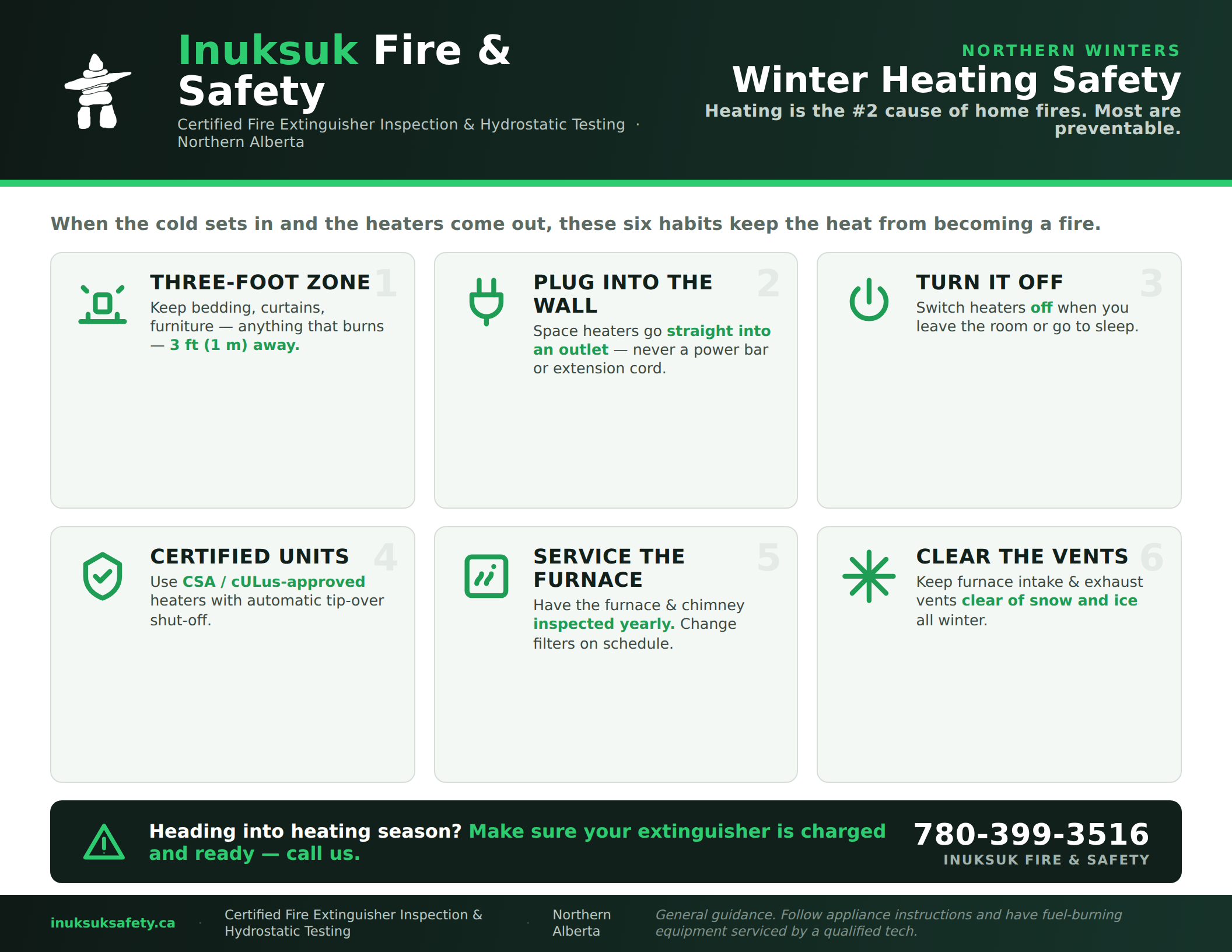
1. Create a Three-Foot Zone
Keep bedding, curtains, furniture, clothing, paper, and anything else that burns at least three feet (one metre) away from space heaters, fireplaces, wood stoves, and other heat sources. Do not use a heater to dry clothing or warm bedding.
2. Plug Space Heaters Into the Wall
Plug a space heater directly into a wall outlet. Do not use a power bar or extension cord, and stop using the heater if the plug, outlet, or cord becomes hot. A high-watt appliance can overload a circuit even when the heater appears to be working normally.
3. Turn It Off
Switch portable heaters off whenever you leave the room or go to sleep. Keep children and pets away, place the unit on a stable surface, and never leave a portable heater operating without an adult present.
4. Use Certified Units
Choose a CSA- or cULus-approved heater with automatic tip-over shut-off and the features recommended for its intended location. Replace damaged equipment rather than attempting an improvised repair.
5. Service the Furnace
Have the furnace and chimney inspected yearly by a qualified technician, and change filters on schedule. A clean, maintained system is less likely to overheat or produce dangerous combustion problems. Keep smoke and carbon monoxide alarms working on every level.
6. Clear the Vents
Keep furnace intake and exhaust vents clear of snow and ice throughout winter. Blocked vents can interfere with combustion and ventilation. Check them after storms and whenever drifting snow is likely to cover the openings.
Check Your Fire Protection Before the Cold Arrives
Make sure extinguishers are visible, accessible, charged, and current before the heating season begins. InspectExtinguishers helps businesses and fire extinguisher service companies track equipment, locations, deficiencies, and service dates across multiple sites. Visit InspectExtinguishers at inspectextinguishers.com to start a free trial.
Track extinguisher inspections, service history, and deficiencies before heating season starts.
Affiliate link — we may earn a commission from qualifying purchases
Stop Tracking This Manually.
The Inuksuk Compliance Platform tracks every inspection, hydrostatic test, recharge, and deficiency across your entire extinguisher fleet — automatically. Real-time compliance status, technician accountability on every record, and audit-ready reports in 30 seconds. Built by certified field technicians for industrial and multi-site operations.